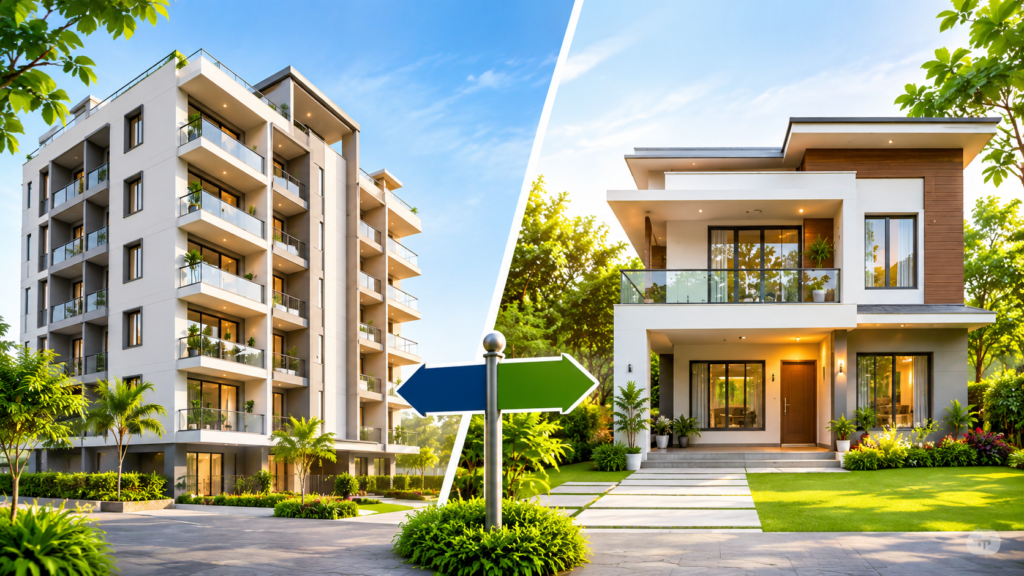
When buying an apartment, one question frequently arises: should you choose a north-facing or south-facing home?
Apartment orientation can influence natural lighting, temperature, ventilation, and overall comfort.
However, the best direction depends on more than a compass reading.
Understanding how orientation affects your living environment can help you evaluate apartments more practically.
1. What Does Apartment Facing Mean?
An apartment’s facing direction may refer to its main entrance, primary windows, balcony, or another reference point.
These are not necessarily the same.
For example, an apartment may have a north-facing entrance while its living room windows face west.
Before comparing properties, clarify what the advertised direction actually describes.
For natural lighting and thermal comfort, the orientation of major windows and exposed walls is often more relevant than the entrance direction alone.
2. Understanding the Sun’s Movement
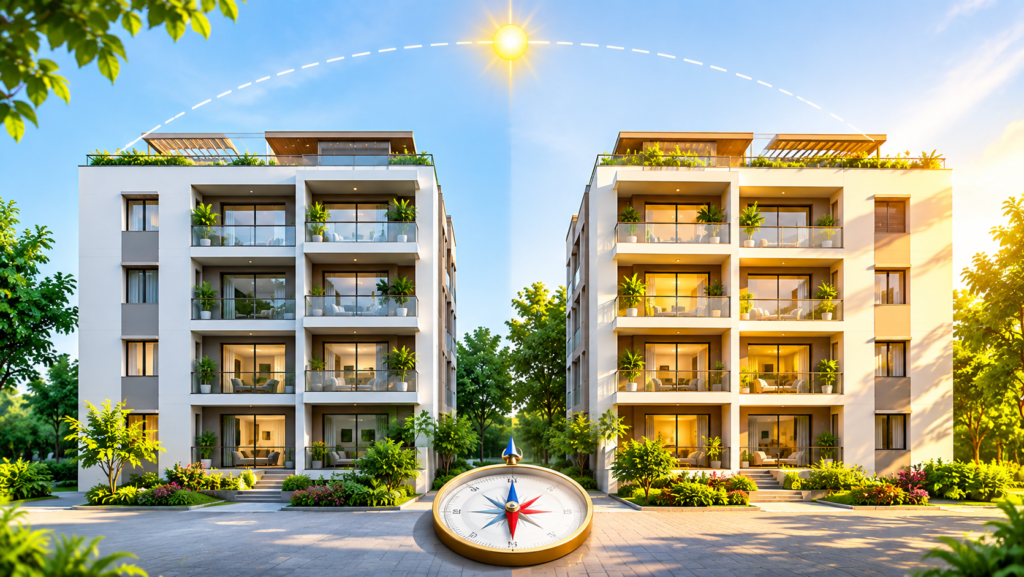
The sun rises generally in the east and sets generally in the west, although its exact path changes throughout the year.
In India, the amount and angle of sunlight received by different building surfaces depend on latitude, season, surrounding structures, and orientation.
As a result, a particular direction does not guarantee the same indoor conditions in every location.
Understanding the sun’s movement can help buyers assess potential daylight and heat exposure.
3. North-Facing Apartments
North-facing windows can receive relatively diffuse daylight during certain periods, depending on the location and season.
This may contribute to a comfortable indoor environment.
However, the amount of direct sunlight varies throughout the year.
A north-facing apartment is not automatically cooler or brighter.
Neighbouring buildings, window dimensions, and shading can significantly affect the actual experience.
4. South-Facing Apartments
South-facing windows can receive substantial sunlight during parts of the year.
Depending on the building’s design, this may provide useful daylight.
However, excessive solar exposure can increase indoor heat.
Appropriate shading, insulation, glazing, and ventilation can help manage thermal comfort.
The suitability of a south-facing apartment should be assessed based on its actual design and local climate.
5. East-Facing and West-Facing Windows
East-facing windows generally receive morning sunlight.
Many residents appreciate this because it can brighten rooms earlier in the day.
West-facing windows often receive stronger afternoon sunlight, which may increase indoor heat under certain conditions.
However, effective shading and building design can reduce unwanted heat gain.
When comparing apartments, examine all major window orientations rather than focusing on a single direction.
6. Natural Light and Surrounding Buildings
Orientation is only one factor influencing daylight.
A north-facing apartment with an unobstructed outlook may receive better natural light than a south-facing apartment blocked by another building.
Window size, room depth, balcony projections, and nearby structures all influence the amount of daylight entering a home.
Visit the apartment during the daytime to assess actual lighting conditions.
7. Ventilation and Wind Direction
Apartment orientation can also influence ventilation.
However, airflow depends on prevailing winds, window placement, internal layout, and surrounding obstructions.
An apartment with windows on different sides may support cross-ventilation where wind conditions permit.
A well-designed ventilation arrangement can be more important than the nominal facing direction.
8. Cultural and Personal Preferences
Some buyers consider traditional architectural beliefs, including Vastu principles, when selecting a home.
These preferences can be personally meaningful.
However, cultural preferences should be distinguished from measurable factors such as daylight, temperature, airflow, and accessibility.
Buyers can consider both personal beliefs and practical design requirements when making a decision.
9. What Should You Check Before Buying?
Before selecting an apartment, examine the orientation of its windows, balconies, and major living spaces.
Consider the amount of sunlight received during different parts of the day.
Also assess ventilation, surrounding buildings, shading, and privacy.
Where possible, compare the actual conditions rather than relying solely on the direction mentioned in promotional material.
Conclusion
There is no universally best facing direction for every apartment.
North-facing and south-facing homes can both offer comfortable living environments when designed appropriately.
Natural light, ventilation, insulation, shading, and surrounding structures play important roles.
The right apartment orientation is one that supports your comfort, lifestyle, and personal preferences.